If you’ve ever sat on the couch trying to watch TV while your dog obsessively licks their paws in the background, you know how quickly it goes from “huh, that’s a little weird” to “okay… is something actually wrong?”
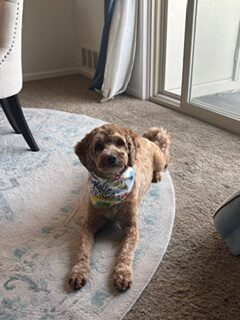
That was me with Mello.
The sound alone was enough to get my attention, but more than anything, I just wanted to make sure he was okay.
What I realized pretty quickly is that paw licking is one of those things that can mean a lot of different things—or sometimes a mix of a few.
There’s Usually a Reason, Even If It’s Not Obvious
One of the first things I learned is that dogs don’t usually lick their paws for no reason.
It might look random, but there’s almost always something behind it.
For Mello, allergies seem to be the biggest trigger—especially during certain times of the year. Things like grass, pollen, or even just being outside more can irritate his paws, and that’s when the licking starts.
Environmental irritation is another big one. Anything your dog walks through—grass, dirt, chemicals, even just dry surfaces—can get stuck between their paws and cause discomfort.
There’s also the possibility of skin issues, like yeast or bacterial buildup between the toes. I’ve learned to pay attention to how his paws look and even smell, because that can tell you a lot.
And then there’s the behavioral side.
I’ve definitely noticed that Mello will lick more on days when he hasn’t had as much activity or stimulation. It’s almost like a way for him to self-soothe or just pass time.
What I Actually Tried (And What Helped)
I wish I could say I found one simple fix right away, but it really came down to paying attention and trying a few things consistently.
The biggest thing that helped was wiping Mello’s paws after walks.
Nothing complicated—just a quick wipe before coming inside, making sure to get between the paw pads. It only takes a few seconds, but it seems to make a difference, especially when allergies are involved.
I also started paying more attention to patterns.
When is he licking the most? After walks? At night? Randomly?
For Mello, it’s usually after being outside, which tells me it’s more environmental than anything else.
Another thing I had to adjust was how I approached anything involving his paws.
Mello is not the most cooperative when it comes to that.
So instead of trying to force anything, I had to keep things quick, calm, and low-pressure. Sometimes that means doing things when he’s already relaxed or a little tired, or distracting him with something while I check his paws.
I’ve also made sure he’s getting enough activity—walks, sniff time, play—because I’ve noticed when he’s more mentally and physically engaged, the licking tends to happen less.
When It’s Time to Call the Vet
There are definitely times when this goes beyond something you can manage at home.
If you notice redness, swelling, a strong smell, or constant licking that doesn’t seem to stop, it’s worth getting it checked out.
Same if your dog seems uncomfortable, is limping, or just isn’t acting like themselves.
I’ll be honest—I waited longer than I probably should have the first time, thinking it would just go away. Sometimes it does, but sometimes it doesn’t.
And it’s better to know what you’re dealing with.
It Takes a Little Patience
Paw licking isn’t always a quick fix.
For Mello, it’s been a mix of things—some environmental, maybe a little seasonal, and occasionally just behavior.
It’s something I still keep an eye on.
If your dog is dealing with this too, you’re definitely not alone. And it doesn’t mean you’re doing anything wrong.
Sometimes they’re just uncomfortable and trying to tell us the only way they know how.
For me, it’s been about keeping things simple, paying attention, and adjusting as needed.
And honestly, that’s been enough.
Why Your Dog Keeps Licking Their Paws (And What Actually Helped Mine)
Leave a Reply